
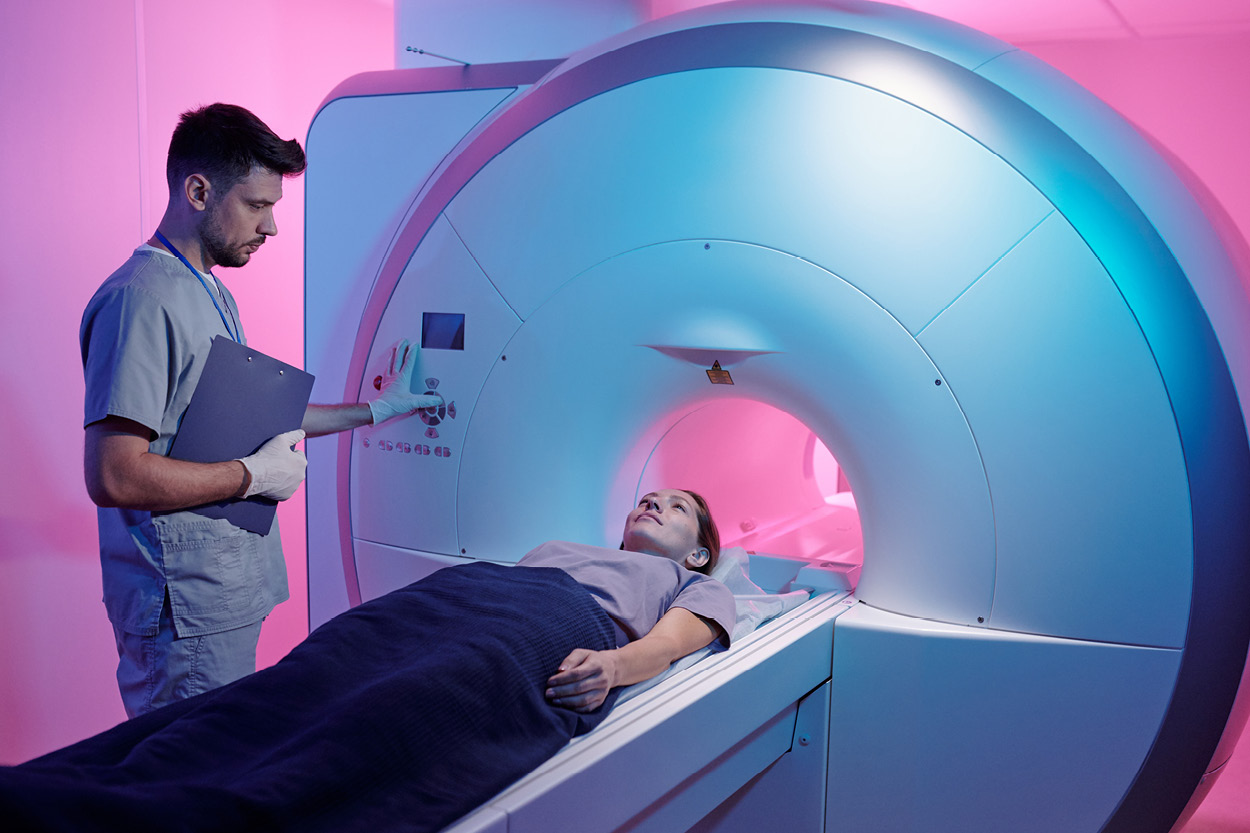
What Actually Happens Inside an MRI Machine
Have you ever slid into an MRI machine and wondered what on earth is actually going on in there? You hear the loud knocking, feel the narrow tube around you, but leave expecting answers your doctor couldn't get any other way. MRI, or Magnetic Resonance Imaging, is one of the most powerful diagnostic tools in modern medicine. Yet, most people have no idea how it works or why it matters so much for catching problems early.
At its core, an MRI machine is a massive magnet. When you lie inside the scanner, the magnetic field aligns the hydrogen atoms in your body's water and fat in the same direction. A series of radio wave pulses is then sent into the body, temporarily knocking those atoms out of alignment. As they snap back into place, they release energy that the machine detects and translates into detailed images of your soft tissues, organs, joints, and brain. Unlike X-rays or CT scans, MRI uses no radiation whatsoever, making it a safe option for repeat imaging when needed.
The loud banging and thumping sounds that patients often find alarming are completely normal. They come from the gradient coils inside the machine, rapidly switching on and off to build up the image slice by slice. Depending on what part of the body is being scanned and what your physician is looking for, an MRI session can take anywhere from 20 minutes to over an hour. Some scans also involve an IV-administered contrast dye to make certain tissues or blood vessels stand out more clearly on the images.
What makes MRI especially valuable is its ability to detect issues that other imaging methods can miss. A torn ligament, an early-stage tumor, inflammation in the brain, a herniated disc pressing on a nerve, these are exactly the kinds of findings that change the course of a patient's care. Early detection through imaging often means more treatment options, less invasive interventions, and better outcomes overall. The scan that feels routine to a radiologist can be life-changing for the person on the table.
If you have been referred for an MRI or want to learn more about your diagnostic imaging options, the team at New York Imaging Specialists is here to help. Schedule your appointment today at nyimaging.com.